OBJECT
CONSERVATION AND RESTORATION
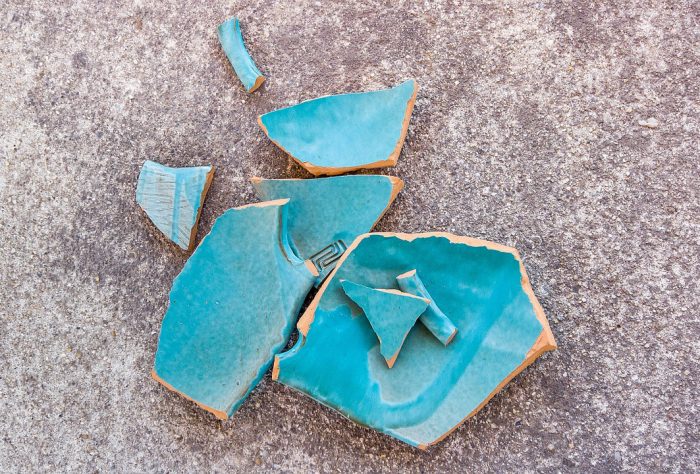
Object conservation pursues the restoration and preservation of three-dimensional objects. This type of artwork presents a unique challenge due to its miscellaneous nature. Over the years we are proud of have worked on objects of all sizes, shapes and materials such as stone, wood, metal, glass, enamels, and synthetic and modern materials on:
- Indoor & outdoor sculpture
- Ceramics and glass
- Metals
- Furniture & other functional objects
- Archaeological materials
- Decorative arts
At Scalpel’n’Brush we recognise that each material possesses its unique process of ageing and deterioration, requiring a thorough understanding of its history and composition. We undertake research, documentation, and scientific analysis before embarking on any restoration treatment.
Interventions on Object Conservation
Objects accumulate dirt, grime and other undesirable surface layers over time. We employ careful cleaning techniques to remove contaminants.
Artworks with fragile or flaking surfaces may require consolidation treatments to stabilise and preserve the existing layers. Our team uses appropriate consolidants and techniques to stop further deterioration, ensuring the object’s long-term stability.
This type of artwork may have old varnishes or coatings. Over time, these layers can become discoloured, degraded, or yellowed, obscuring the object’s original appearance. At our studio we employ meticulous techniques to safely and selectively remove these layers. By removing the degradated coatings, we restore the object’s visual clarity and enable a deeper appreciation of its original artistic qualities.
Objects often suffer from structural issues, such as cracks, breaks, or weakened elements. We repair and reinforce these damages using appropriate techniques, such as adhesive bonding, consolidation, or support structures, in order to restore the artwork’s stability and structural integrity.
Missing or damaged parts require reconstruction. Our team uses reversible materials and techniques compatible with the object’s original composition to reconstruct missing elements and integrate them to restore the artwork’s aesthetic coherence.
Surface finishing and retouching techniques are applied to enhance the appearance and visual unity of restored objects. We apply appropriate finishes, toning and retouching to achieve an harmonious integration of the repaired areas with the object’s original surface.
Objects can benefit from protective coatings to prevent future deterioration. We apply suitable protective coatings, such as varnishes or wax, to shield the artwork’s surfaces from environmental factors like UV radiation or humidity fluctuations.
Objects with gilded surfaces or decorative finishes require particular attention. We are skilful at gilding techniques, including surface preparation, gold leaf application following different techniques, toning and protective coating.
In addition to remedial treatments, we also emphasise the importance of preventive conservation. We offer advice and guidance on proper handling, display and storage techniques to minimise risks of damage caused by environmental factors such as light, temperature, humidity or pests.
Our team is available for consultations and can assist in developing collection management plans, including conservation schedules, condition assessments, and risk management strategies. We work with museums, galleries and institutions to safeguard their valuable art collections.
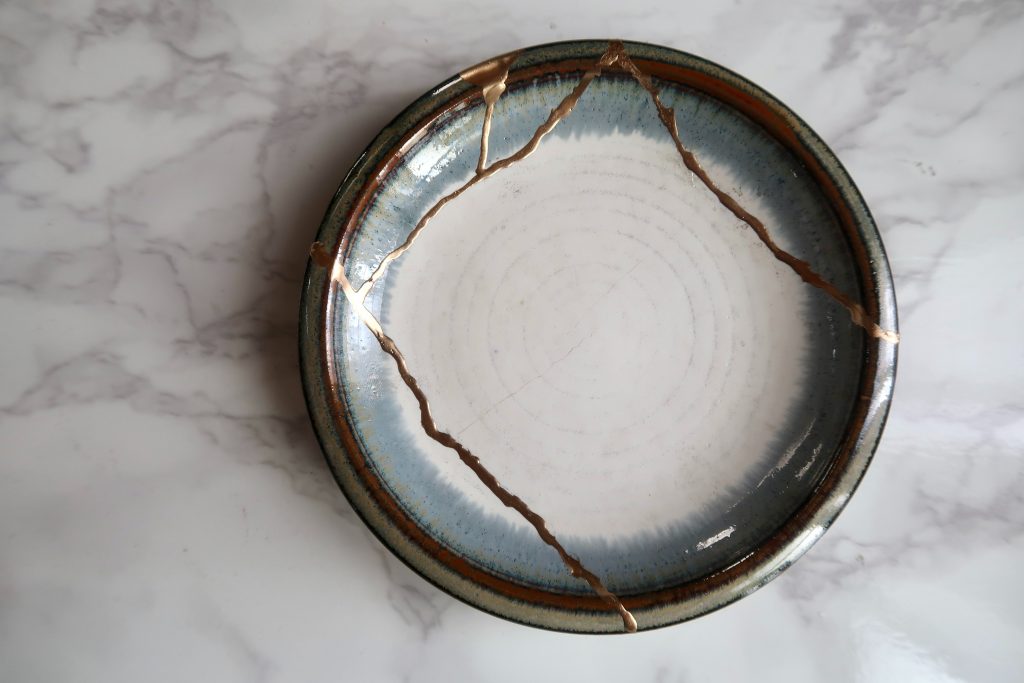
Do you know what is Kintsugi?
It’s the Japanese art of repairing broken ceramics using gold dust and lacquer. Kintsugi (金継ぎ) meaning “to join with gold”, (also known as kintsukuroi (金繕い, “golden repair”) follows the philosophy of embracing the flawed or imperfect. As opposed to most of our restoration treatments, Kintsugi doesn’t aim to conceal the damage, it actually highlights it with gold. Kintsugi shows us how to see the breakages as an opportunity to add beauty and character to the piece. It is the scars that beautify the object.
We recently added this technique to our range of restoration processes, would you like to know more? Get in touch!
Talk to us
Have any questions? We are always open to talk about your artworks, new projects, creative opportunities and how we can help you.